Sleepers — When Hell Has a Name and a Surname
Barry Levinson turns prison drama into a feast of cruelty and redemption. Spoiler: forgiveness hurts more than the punches.
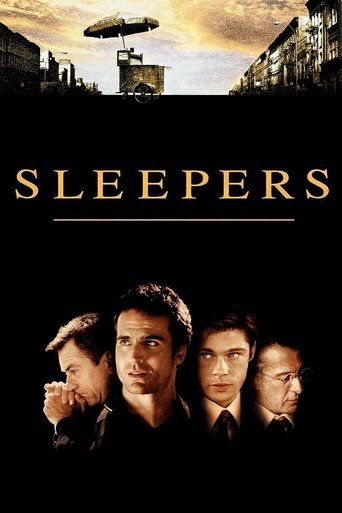
Sleepers: full review

As an Amazon Associate, Claqueta Ácida earns from qualifying purchases.
The cinema of the ‘90s had a sick obsession with turning pain into spectacle, and Sleepers is its unintentional masterpiece. Barry Levinson, that guy who seemed more interested in details than low blows, gifted us in 1996 with a film that smells of prison piss, a baseball bat to the face, and cheap redemption. It’s not a pretty film, nor is it a fair one—but it’s a necessary one: the kind that reminds you hell doesn’t always have horns and a tail; sometimes it just wears a priest’s uniform and a plastic smile. They shot it in Baltimore, where November’s chill seeps into your bones like a bad omen, and where the slums aren’t set dressing but an open wound. The budget was $45 million back then—a fortune—and the result is a movie that feels like it was filmed with a stolen camera in a dark alley. There are no filters here, just sweat, blood, and the certainty that the system doesn’t forgive—it only punishes with style.
But Sleepers isn’t just a dirty-realism exercise disguised as prison drama. Above all, it’s a funhouse mirror of the America that believed itself invincible in the ‘90s, the one selling Forrest Gump as a portrait of its moral grandeur while poor kids in the ghettos kept falling into the system’s traps. Levinson, who had already proven his mastery in Rain Man and Avalon, dives into the muck without a net, as if he knew the only way to tell this story was by getting his hands dirty. The screenplay, written by him, is a double-edged knife: it drags us toward vengeance with surgical precision, then spits in our face the idea that justice, when it arrives, is always late and comes with a bill.

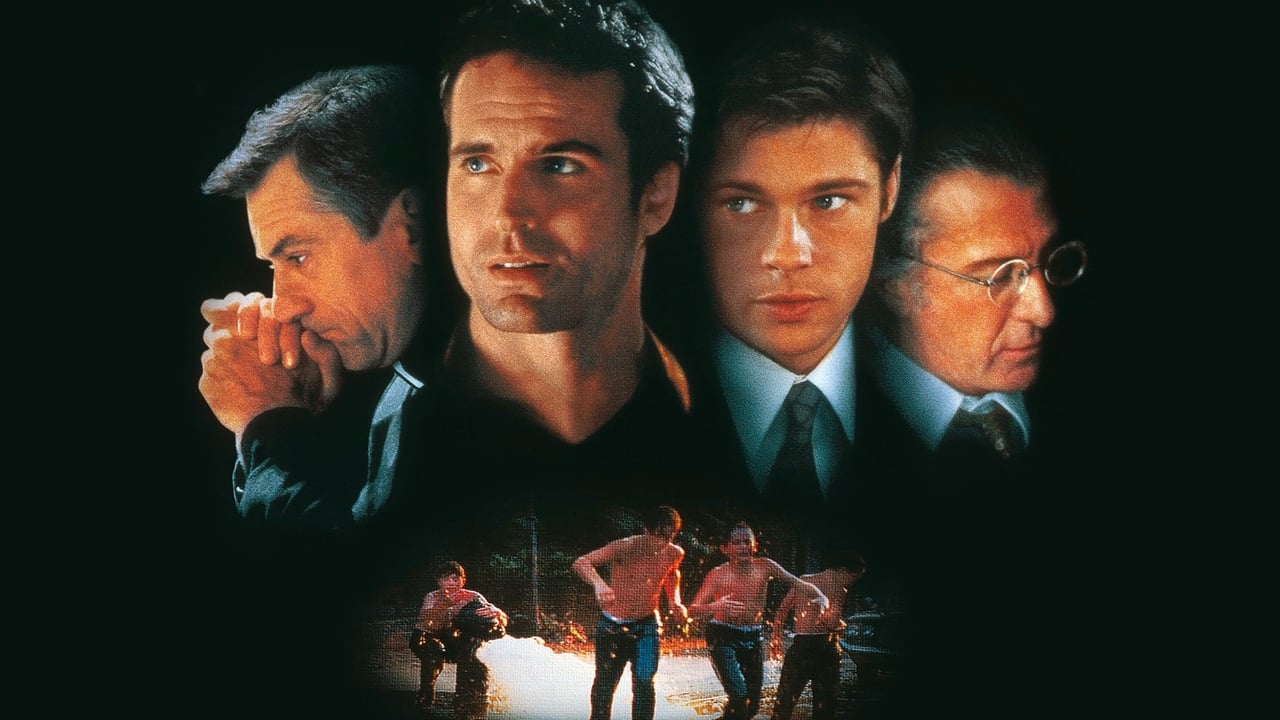
The film opens with a sequence that’s pure poetry of disaster: four teenagers—Jason Patric, Brad Pitt, Robert De Niro, and Dustin Hoffman—play football on train tracks as sunlight filters through buildings like a halo of hope. Suddenly, a railcar drags them, and the shot freezes on their faces, bathed in that golden light that looks like it’s straight out of a Hopper painting. It’s the moment the viewer understands they’re not watching a film about lost innocence but about violated innocence. And the worst part? Levinson doesn’t give us time to digest it: the next shot is a priest (Robert De Niro) smiling as he beats one of the boys with a baseball bat. There’s no music here, just the sound of impact—dry and final—as if the filmmaker had decided silence was the only accompaniment worthy of such cruelty.
Levinson’s direction is an exercise in restraint bordering on masochism. There are no unnecessary long takes, no cloying music trying to soften the blow. Every scene is calculated to make the viewer feel the weight of what they’re seeing, as if carrying an invisible yoke. The editing, by Stu Linder—who had already worked with Levinson on Rain Man—is relentless: it cuts from a shot of the kids laughing in the park to a close-up of their bloodied fists in prison, as if time itself had stopped to punish them. And then there’s the cinematography by Michael Ballhaus, that light magician who turned 1990s Baltimore into a character in its own right. His shots, bathed in sepia tones and cold blues, make every alleyway feel like an open grave. Ballhaus isn’t seeking beauty here—he’s seeking truth, and in Sleepers, the truth smells like a sewer.
The performances are the throbbing heart of this nightmare. Jason Patric, as Michael Sullivan, is an actor who’s never gotten the credit he deserves. Here, beneath that layer of calculated coldness, beats a pain that hurts to watch. Brad Pitt, in his pre-Fight Club phase, already proved he could be more than just a pretty face: his Lorenzo Carcaterra is a character that oscillates between rage and vulnerability, as if carrying the weight of every child the system has broken. But the real monster—and I say that with all the affection in the world—is Dustin Hoffman. His role as Danny Snyder, the priest who should protect children but destroys them, is a performance that teeters between the grotesque and the tragic. Hoffman doesn’t act—he devours the screen with a smile that could freeze hell. And then there’s Robert De Niro, who here isn’t the gangster from Goodfellas but the system personified: his priest is a man who believes punishment is love, and that duality is what makes his performance so unsettling.

The screenplay, based on Lorenzo Carcaterra’s autobiographical novel, is an exercise in emotional manipulation that works because it’s not ashamed of its own cruelty. Every twist is designed to make the viewer feel that vengeance is just, even necessary—but also to remind us that justice, when it arrives, always comes with a price. There’s a moment when Michael Sullivan (Patric) tells his lawyer (Kevin Bacon): “It’s not justice. It’s revenge.” And there lies the key: Sleepers isn’t a film about redemption—it’s a film about the impossibility of redemption when the system has branded you with a hot iron.
The music, composed by John Williams—yes, the man behind Star Wars—is a stroke of genius that borders on the perverse. Williams, usually associated with epic grandeur or tenderness, opts here for unsettling minimalism, as if he knew any extra note would ruin the effect. The main themes are slow, almost funereal, and blend with ambient sounds—the crack of bones, the echo of footsteps in prison hallways—to create an atmosphere that oppresses like a corset. It’s music that doesn’t accompany—it suffocates.
The production design is another of the film’s strengths, though also one of its most controversial aspects. The prison interiors, designed by Kristi Zea, are claustrophobic to the point of being unbearable: the cells look like animal cages, the corridors are dead-end tunnels, and every detail—from the rusted faucets to the gray sheets—is meant to remind us we’re in a place where humanity has gone extinct. But it’s in the exteriors where the film shines: Baltimore, with its red-brick buildings and empty streets, is a character in its own right, a specter watching impassively as children turn into broken men. The costumes, meanwhile, are a study in contrasts: the lawyers’ suits are impeccable, as if the system dressed in gala to commit its crimes; the prisoners’ uniforms are rags hanging off bodies that no longer have souls.
There’s a moment in the film that sums up everything Sleepers is and isn’t. It’s the scene where the four friends, now adults, reunite in the park where they played as children. The camera follows them in a single take that lasts nearly a minute, as if time itself had stopped to judge them. Jason Patric, Brad Pitt, Robert De Niro, and Dustin Hoffman walk toward the camera with a mix of nostalgia and terror, as if they knew the past couldn’t be erased—only buried. And then, suddenly, the shot cuts to black. No music. No dialogue. Just silence, and the certainty that what comes next won’t be redemption—it’ll be punishment.
Sleepers isn’t a film for everyone. It’s a film for emotional masochists, for those who enjoy being bludgeoned by cinema until their guts bleed. It’s a film that doesn’t forgive, that doesn’t soften, that offers no escape. And yet, therein lies its greatness: in its ability to make us feel the weight of injustice, the rage of vengeance, and the impossibility of escaping the system that molds us. Barry Levinson didn’t give us a pretty film. He gave us a necessary one.
And if that isn’t art, may God strike me down.
The best
- Barry Levinson’s direction, which turns pain into raw, uncompromising spectacle
- The performances of Jason Patric and Dustin Hoffman, elevating the material to unsettling heights of authenticity
- Michael Ballhaus’ cinematography, which turns Baltimore into a character—dirty and real
- The screenplay, which oscillates between vengeance and justice with surgical precision
- John Williams’ score, which accompanies without adornment, like a ghost whispering in the dark
- The production design, which turns the prison into a hell on Earth
- The park reunion sequence, a single take that sums up the entire film in a minute
The worst
- The third act, which feels rushed and loses some of the accumulated tension
- Some dialogue that sounds more like a sermon than real conversation
- The lack of development for some secondary characters, reduced to archetypes
- The ending, which, while impactful, may come off as too melodramatic for some viewers
- The soundtrack, which in some moments borders on the redundant
- The pacing in the second half, which feels slower than necessary
- The portrayal of the victims, which sometimes seems like a dramatic device rather than reality
The Verdict of Claqueta Ácida
Sleepers is that film that leaves the bitter taste of injustice in your mouth and the certainty that cinema, sometimes, can be a weapon more dangerous than a baseball bat. In 1996, Barry Levinson gifted us a masterpiece of dirty realism, a film that seeks neither comfort nor redemption but shows hell as it truly is: unfiltered, merciless, and without a happy ending. It’s not a film for the faint of heart, nor for those seeking escapism. It’s a film for the brave, for those who prefer pain to lies. And while its third act stumbles and some dialogue sounds like cheap sermonizing, its greatness lies in never apologizing for being so raw. Cinema shouldn’t be pretty. It should be necessary. 💀🎬 Tráiler Oficial
Abrir en YouTube
Sleepers: frequently asked questions
- What is the rating of "Sleepers" on Claqueta Ácida?
- "Sleepers" scored 7.6/10 on Claqueta Ácida in the review by Dante Sangre.
- Is "Sleepers" worth watching?
- Yes. We gave it 7.6/10 (Nuclear Fusion), our rating for must-see films.
- Who directed "Sleepers"?
- "Sleepers" was directed by Barry Levinson.
Theater Collateral Damage Report
Psychophysical impact certificate issued by Dante Sangre
1 amago en el tramo intermedio; pestañeo pesado en las transiciones más innecesarias.
Un par de miradas al reloj en el tramo intermedio, comprobando cuánto quedaba de suplicio.
1 espresso para no dejarse vencer por la mediocridad cómoda.
"A mitad del segundo acto cuando la subtrama secundaria empezó a pesar más de lo que aportaba."
💬 Community Verdict
What did you think of the film? Rate it from 0 to 10 to compare it with the editorial review.
You haven't voted yet
📢 ¿Te ha gustado el ácido?
Comparte esta crítica con tus amigos cinéfilos o desata la polémica en redes.
⚡ THE CINEMATIC VENOM YOUR INBOX CRAVES
No sugarcoated ratings, no corporate fluff. Subscribe for our uncensored weekly analysis or join the private Telegram for press previews, poll clashes, and instant alerts.
Alertas de estrenos en 1 segundo, encuestas en caliente y audios al salir de pases de prensa.
Recibe la dosis semanal en tu mail + regalo inmediato del PDF con 50 joyas ocultas de culto.
Related Reviews
Recommended autopsies for demanding film buffs.
 ⚡ Ácido Cítrico 5.8
The Bay: An Outbreak of Mediocrity in the Maryland Bay
⚡ Del mismo director (Barry Levinson): analiza la evolución o degradación de su estilo.
An acidic review of Barry Levinson's film that tries to scare with viruses and ends up as a low-budget routine.
 🔥 Fusión Nuclear 9.3
2001: A Space Odyssey — The Day Kubrick Left Us Speechless (and Oxygenless)
⚡ Consagradas en el olimpo transgresor con 🔥 Fusión Nuclear.
Kubrick turned science fiction into pure art: 149 minutes of eloquent silence, bone-wielding apes, and a psychopathic computer. Masterpiece or pretentious fraud? Here’s the verdict.
 🔥 Fusión Nuclear 8.5
*A Clockwork Orange: The Sweet, Rusty Aftertaste of Violent Haute Couture*
⚡ Consagradas en el olimpo transgresor con 🔥 Fusión Nuclear.
A scathing review of Kubrick’s masterpiece, where ultraviolence meets 60s fashion in a twisted pas de deux.
Editorial Ecosystem
Cinephile connections, archive interviews and related analyses.
🎞️ In Claqueta Cinematheque 1

💬 Debate Cinéfilo & Autopsia de Lectores
0 veredictos¿Discrepas con nuestra nota? ¿Es una obra maestra o veneno puro? Deja tu veredicto abajo sin necesidad de registro.


Aún nadie ha dejado su veredicto para esta película.
Sé el primero en clavarle el colmillo rellenando el formulario de arriba.